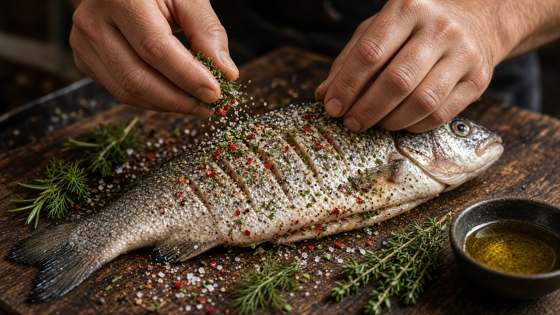
Smoking fish at home turns a plain fillet into rich, flaky, savory fish, and hot smoking is the beginner-friendly route. The steps are a brine, a drying rest, then a low, steady smoke until the fish reaches 145 F inside.
Choose the fish
Oily fish such as salmon, trout, mackerel, bluefish and whitefish smoke beautifully. Lean fish dry out more easily. Use very fresh fish, or fish that was frozen promptly and thawed in the refrigerator. See how to choose fish at the market.
Step 1: Brine
A basic wet brine is about 1/4 cup kosher salt and 1/4 cup brown sugar per quart of cold water. Submerge fillets for 1 to 3 hours in the refrigerator depending on thickness. Dry cures using salt and sugar work too and are covered in curing salmon: gravlax and lox.
Step 2: Form a pellicle
Rinse the fillets, pat dry and set them on a rack in the refrigerator, uncovered, for 2 to 4 hours, until the surface looks tacky and matte. This skin, called the pellicle, helps smoke stick and keeps the fish from weeping.
Step 3: Smoke
- Heat the smoker to about 175 to 225 F with a mild wood.
- Place the fish on greased racks, skin-side down, with space around each piece.
- Smoke for 1 to 3 hours depending on thickness and temperature.
- Remove when the thickest part reaches 145 F on an instant-read thermometer.
Wood choices
Alder is the classic choice for salmon. Apple and cherry add sweetness, and hickory and oak are stronger. Avoid resinous softwoods such as pine, and never use treated lumber.
Hot smoke versus cold smoke
Hot-smoked fish is cooked through and flaky. Cold-smoked fish, like lox-style sliced salmon, is cured and smoked at low temperatures without being cooked, and it carries food-safety risks, notably Listeria. Beginners should stick to hot smoking. If you choose to cold smoke at home, follow current published guidance for your method and do not serve it to pregnant people, older adults or anyone with a weakened immune system. The FDA's page on food safety for pregnant women covers the concern.
Storage
Cool smoked fish quickly, wrap it tightly and refrigerate. Use home-smoked fish within a few days, and freeze for longer storage. Do not leave it at room temperature for more than two hours. See smoked fish storage guidelines.
Troubleshooting
- Too salty: shorten the brine next time and rinse well.
- White ooze on the surface: that is albumin; a gentler heat at the start reduces it.
- Bitter taste: too much smoke or dirty smoke; keep a thin blue smoke, not thick white.
Check FishWatch for species facts and the FDA page on safe food handling for basics.
Equipment options
A dedicated smoker, a pellet grill, a kettle grill set up for indirect heat with a smoker box, or a small stovetop smoker will all work. What matters is steady low heat and a reliable thermometer in both the smoker and the fish. Keep ash and grease clean, and place a drip pan under the fish. Smoke outdoors only, never in a closed garage.
Serving ideas
Flake hot-smoked fish into scrambled eggs, pasta, salads or a creamy dip with lemon and dill, or serve warm with potatoes and mustard sauce. Smoked trout makes a quick salad; see smoked trout salad. For a stronger smoky note, pair with a dark beer or a dry riesling.
Smoking fish at home takes an afternoon and a bit of patience, and the first batch will probably disappear faster than you expect.