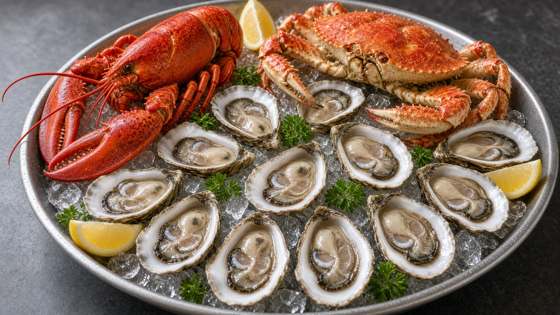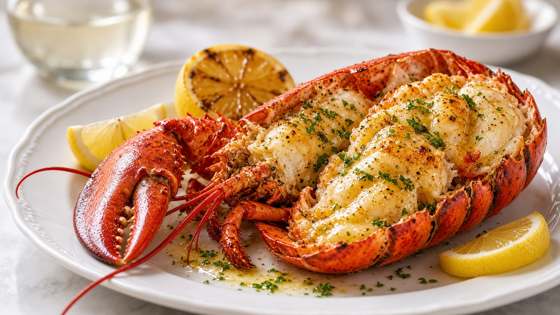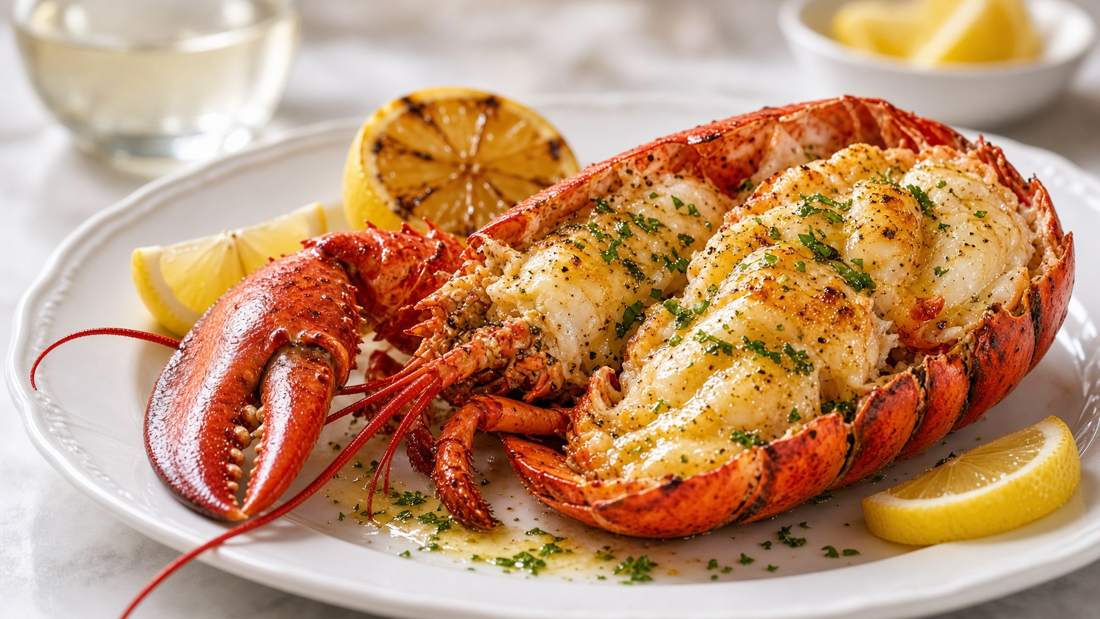
Boiled lobster at home is simpler than most people fear: one big pot, salted water and a timer. A fresh lobster cooked for the right number of minutes is sweet and tender, and a pot full for four people often costs less than a single restaurant entree.
Serves 2 to 4. Prep 10 minutes, cook 8 to 15 minutes. Difficulty: easy, with a brief moment of nerve.
What You Need
- 4 live lobsters, 1 1/4 to 1 1/2 pounds (570 to 680 g) each, or 1 per person
- A stockpot of at least 12 quarts (11 L) for 2 lobsters, larger for 4
- Water: 3 quarts (about 3 L) per lobster, with 2 tablespoons salt per quart for a sea-like taste
- Melted butter, lemon wedges, crackers or a nutcracker, a bowl for shells
Boiled Lobster at Home: How to Boil Live Lobster
- Keep lobsters cold and moist (in the refrigerator under damp paper) until cooking. Cook them the day you buy them. See live lobster and crab care for holding tips; a lively lobster that curls its tail when picked up is a good sign.
- Bring the salted water to a hard rolling boil. Many cooks chill the lobsters in the freezer for 15 to 20 minutes first to make them sluggish, a method often described as a gentler approach; an alternative is a quick cut through the head with a sharp knife just before cooking.
- Grasp the lobster behind the claws and plunge it headfirst. Cover and return to a boil. Start timing from that point.
- Cook by weight: roughly 8 minutes for 1 pound, 10 minutes for 1 1/4 pounds, 12 minutes for 1 1/2 pounds, 15 minutes for 2 pounds. Add 3 minutes per extra pound beyond that.
- Lift out with tongs and let drain. The shell should be bright red and the tail curled; the meat should be opaque white with no translucent grey.
Steaming as an alternative to boiled lobster at home
Use 2 inches of boiling salted water with a rack, and add about 2 minutes per lobster for the same weight. Steaming is gentler on the claws and wastes less flavor.
How to Crack and Eat It
- Twist off the claws and knuckles; crack with a nutcracker or the back of a heavy knife.
- Twist the tail from the body, press the flippers to push the tail meat out in one piece, and remove the dark vein.
- Eat the tomalley (green liver) if you like; it is rich, but some health agencies advise against eating tomalley because it can concentrate toxins, so check current guidance first.
Buying Tips
Hard-shell lobsters have more meat per pound; softer-shell (new-shell) lobsters are sweeter but yield less. Buy alive and active from a tank with clean water. The NOAA FishWatch page on American lobster and Seafood Watch explain the fishery.
Storage and Reheating
Remove meat from the shell within 2 hours, refrigerate and use within 3 days. Reheat gently in butter or in a covered dish in a low oven until hot (165 F). Leftover meat is excellent in a lobster roll; see Maine versus Connecticut lobster rolls.
Troubleshooting
- Tough meat: overcooked; use a timer.
- Watery, mushy meat: the lobster was poor quality or held too long out of water.
- Dead before cooking: cook only if it died just before cooking and is firm and fresh; discard if it smells off or was dead for a while.
With a timer and a big pot, boiled lobster at home becomes a repeatable celebration meal for the price of a good steak.