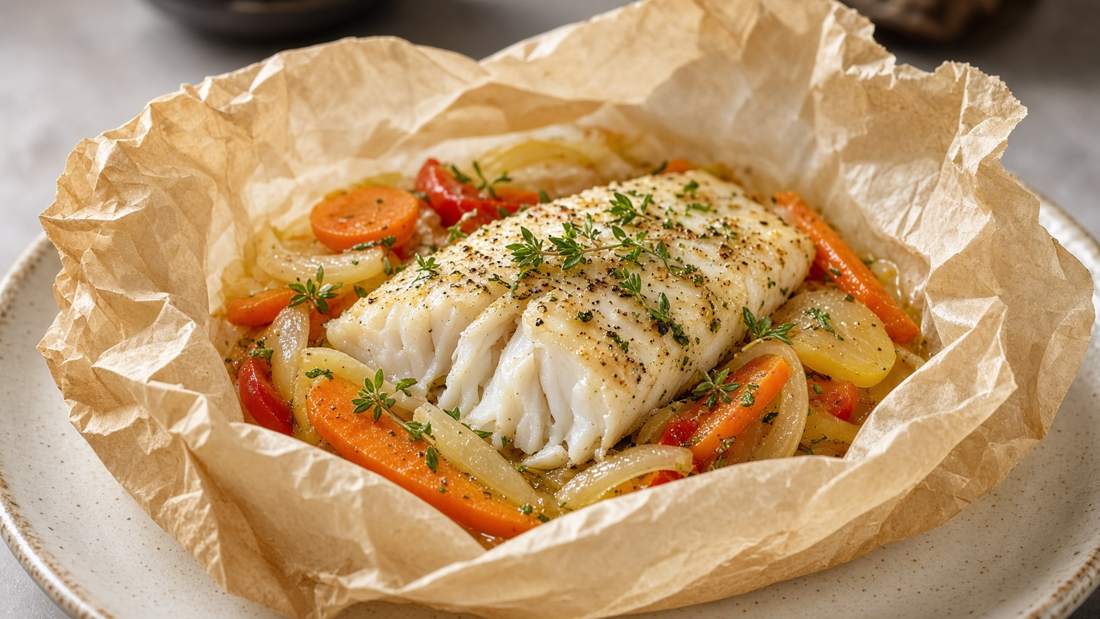
Fish en papillote is a French method that simply means fish baked in a folded parchment packet, where its own moisture and a few aromatics turn into steam that cooks everything gently. The fillet comes out tender and moist, the vegetables are crisp-tender, and the only dish to wash is the baking sheet. It is also a quietly impressive way to serve dinner guests, because each person opens their own packet at the table.
Serves 4. Prep 15 minutes, bake 12 to 15 minutes. Difficulty: easy once you have folded a packet or two.
Ingredients
- 4 fillets (5 to 6 oz each) of cod, haddock, halibut, snapper, or sea bass, about 1 inch (2.5 cm) thick
- 1 zucchini, cut into thin half-moons
- 1 cup cherry tomatoes, halved
- 1 small fennel bulb or 1 leek, very thinly sliced
- 4 teaspoons olive oil or 4 small pats of butter
- 8 thin lemon slices
- Fresh thyme, dill, or parsley
- 4 tablespoons dry white wine or water
- Salt and pepper
- Four 15 x 12 inch (38 x 30 cm) sheets of parchment paper
How to make fish en papillote
- Heat the oven to 400 F (200 C) and set a rimmed baking sheet on the middle rack.
- Fold each parchment sheet in half like a book, then open it. Pile a quarter of the vegetables on one side of the crease, keeping them in a thin layer.
- Pat the fillets dry, season both sides, and lay one on each vegetable pile. Top with lemon slices, herbs, oil, and a tablespoon of wine.
- Fold the free half of the paper over the fish. Starting at one corner, make small overlapping folds along the open edges to form a sealed half-moon, twisting the final tip.
- Slide the packets onto the baking sheet and bake 12 to 15 minutes. They should puff up and the paper will brown at the edges.
- Rest the packets for 2 minutes, then cut them open at the table, being careful of the hot steam.
How to tell fish en papillote is done
Fish is safe at an internal temperature of 145 F (63 C), and it should turn opaque and flake easily with a fork. If you are unsure, open one packet and check the thickest part; reseal with foil and return it for 2 minutes if needed. The FDA advice about eating fish is a useful reference for safe handling.
Choosing fish and vegetables
Lean, firm white fish works best because it holds its shape in steam. Salmon and arctic char also work, but need about 2 minutes longer for thick fillets. Hard vegetables such as carrots or potatoes should be sliced paper-thin or par-cooked first, because they will not soften in 15 minutes otherwise. Frozen fillets are fine; thaw them in the refrigerator overnight and pat very dry. For sustainability guidance when buying, check Seafood Watch.
Flavour combinations to try
- Ginger, scallion, soy, and a splash of sesame oil for an Asian leaning packet
- Olives, capers, tomatoes, and oregano for a Mediterranean version
- Leeks, white wine, and tarragon for a classic French style
Storage and reheating
Leftover fish keeps 3 to 4 days in the refrigerator in a sealed container. Reheat gently at 275 F (135 C) until warmed through, and serve cold on salad if you prefer. If you like parchment cooking, if you enjoy oven-baked fish, the baked cod with herb crust makes a nice contrast with a crunchy top, and Mediterranean baked fish with tomatoes borrows the same herb-and-tomato flavours in an open dish.
Troubleshooting
- Packets leak: crimp the edges more tightly and use fresh, flat parchment, not foil-lined paper that has been creased.
- Watery results: do not add extra liquid beyond the wine, and avoid piling raw spinach, which releases a lot of water.
- Paper burns: keep the oven rack in the middle and do not exceed 425 F.
Once you have folded one, fish en papillote becomes a dependable weeknight habit. Adjust the vegetables to whatever is in the crisper drawer and dinner is sealed, baked, and on the table in about half an hour.